The drinks and the ice cream get a field guide each. The savory shelf deserves one too. Every konbini in Japan carries the same bagged snacks, the same brands that have sat there for fifty years, and most of them cost less than a coffee. These are the standards. Here is the shelf, decoded.
Umaibo
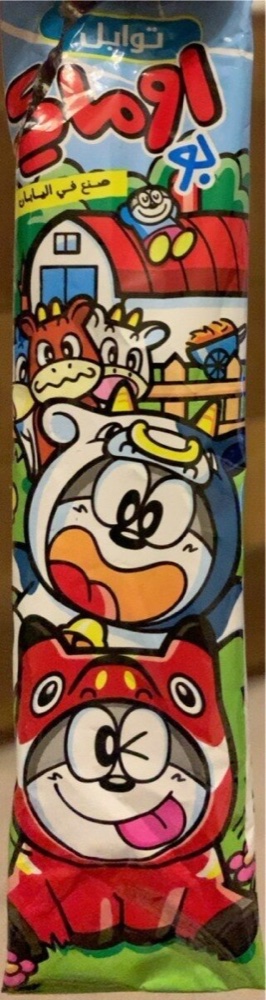
The stick up top, and the place everyone starts. Umaibo is a puffed-corn stick made by Yaokin, it was 10 yen for forty years, and two price rises since 2022 have nudged it to a still-absurd 15. It is dagashi, the category of cheap snacks Japanese kids buy with pocket change, and it comes in dozens of flavors: corn potage, mentaiko, cheese, takoyaki, salami, natto. The mascot is a cartoon cat. The whole thing is a joke that has lasted half a century, because the joke is good. Buy ten. You can afford it.
Jagariko
No picture for this one, but you know the cup. Jagariko is Calbee's potato in stick form, packed into a paper cup, dense and crunchy in a way that lands closer to a fry than a chip. The cup is the design. One hand, no crumbs on the train, eat it walking. There is a known trick where you pour hot water in, add a stick of cheese, and mash it into a stretchy aligot. The internet named it Jaga-Arigo, and Calbee leaned into it. People have strong feelings about the flavors. Salad and cheese are the arguments.
Kaki no Tane
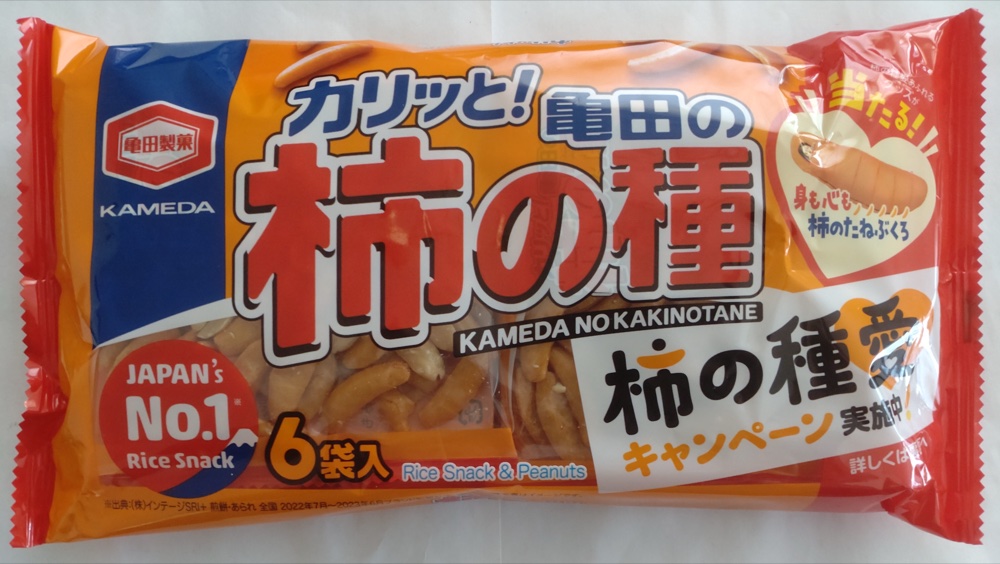
The orange crescent-shaped rice crackers, mixed with peanuts, sold in little foil packets. This is the adult snack, the one that goes with beer, the otsumami. The spicy-soy cracker and the peanut are meant to be eaten together, and the ratio is a real debate. Kameda, the biggest maker, once standardized it and then held a national vote on the perfect cracker-to-peanut ratio, because the country actually cared. That is Kaki no Tane. A snack with discourse.
Kappa Ebisen
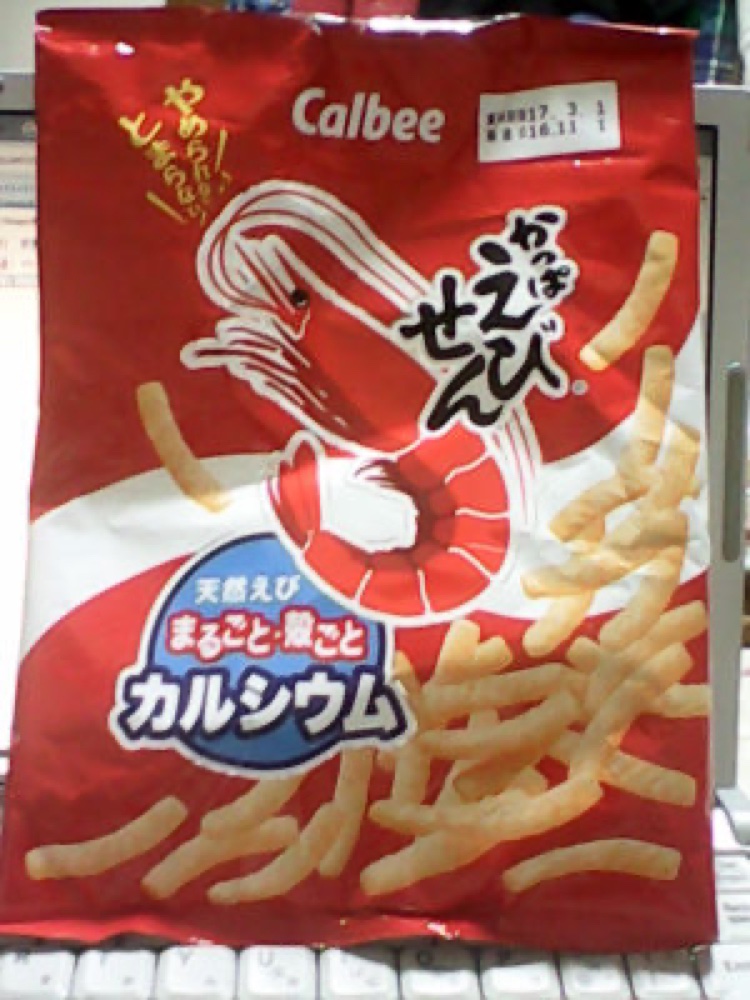
Calbee again, this time real shrimp ground into a crunchy baked stick. The slogan, on the bag since the sixties, is yamerarenai, tomaranai, you cannot stop, you cannot quit, and it is not marketing, it is a warning. The bag is gone before you decide to finish it. It tastes like the ocean and salt and nothing else, which turns out to be exactly enough.
Karl
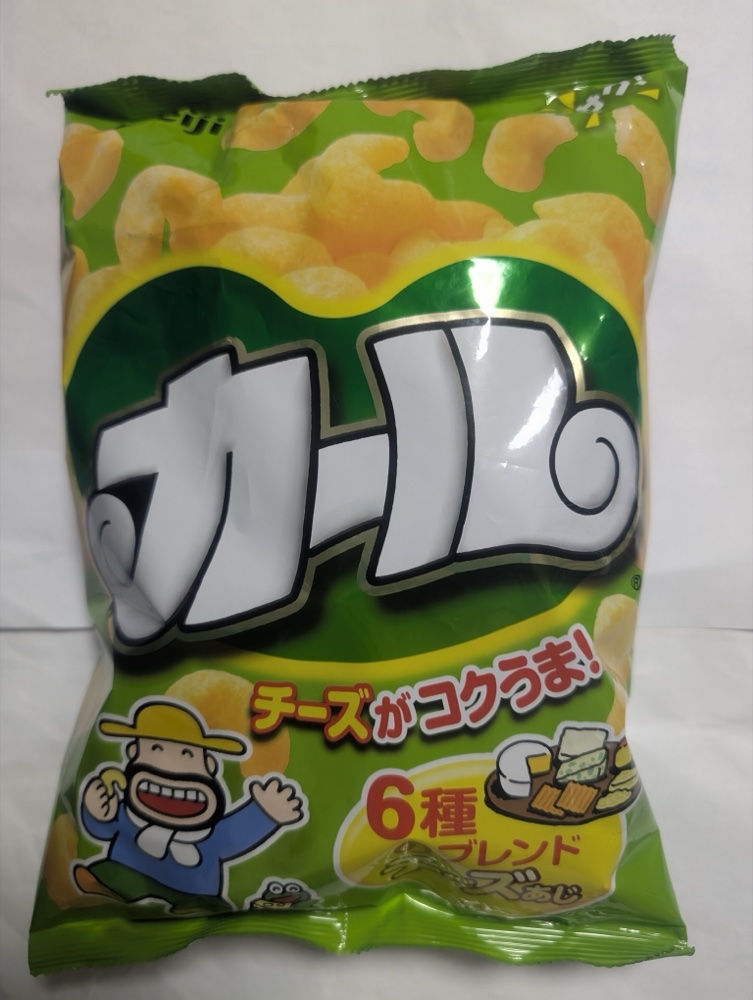
Here is the sad and great one. Karl is Meiji's cheese corn puff, soft and melting, around since 1968. In 2017 Meiji pulled it from eastern Japan, sales having fallen to a third of their peak, and now you can only buy it in the west, in Kansai and below. So a bag of Karl in Tokyo is contraband, carried home by someone who went to Osaka. A mass-market snack that became a regional souvenir by accident. If you see it, buy it.
Calbee Potato Chips

The default. Calbee owns the chip aisle the way Morinaga owns the freezer. Usushio is the light-salt one, the standard. Consomme Punch is the brown bag everyone secretly prefers. Nori Shio is seaweed and salt and better than it sounds. Pizza Potato, pictured, is the cult one that has no business being as good as it is. Nothing here is reinventing the chip. It is just done correctly, every time, for decades.
Pocky
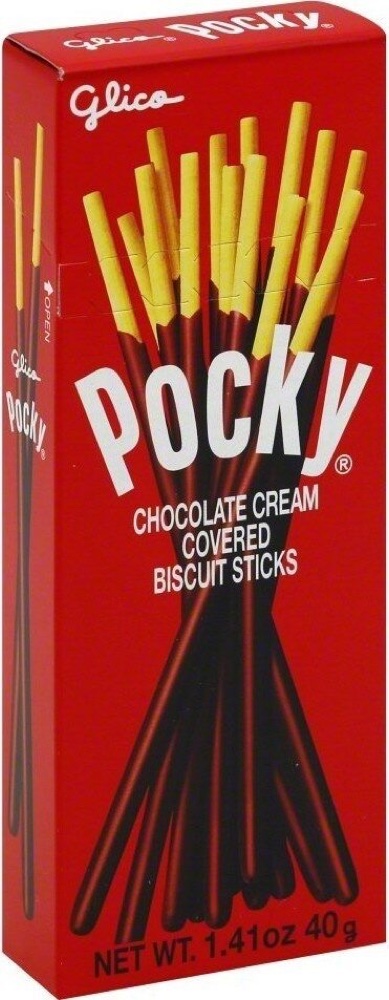
You know Pocky. Chocolate-coated biscuit sticks, Glico, the one snack on this list that made it out of Japan. What people miss is that the savory original came first. Pretz, the plain salted stick, launched in 1963, and Pocky is just Pretz that someone dipped in chocolate three years later. There is a national Pocky Day, on 11/11, because the sticks look like the date. A biscuit with a holiday. Only in Japan does a snack get a calendar.
The shelf
None of this is hard to find. That is the point, same as the ice cream. The konbini snack shelf is a fixed map you can read in any city in Japan, and once you know it you are never more than a few minutes from something good and cheap. The weird stuff is for the hunt. This is for every other day. The one snack here that actually comes from a machine is fresh popcorn in Akihabara, the truly strange end of Japanese snacking lives in the vending machines, and the sweet half of the everyday is over in the ice cream guide.